As of April 27, 2026, the next bank holiday for most people in Britain is just a week away. In England, Wales, Scotland and Northern Ireland, the next national date on the calendar is Monday, May 4, 2026, known as the Early May bank holiday 2026, according to the official UK government bank holiday calendar.
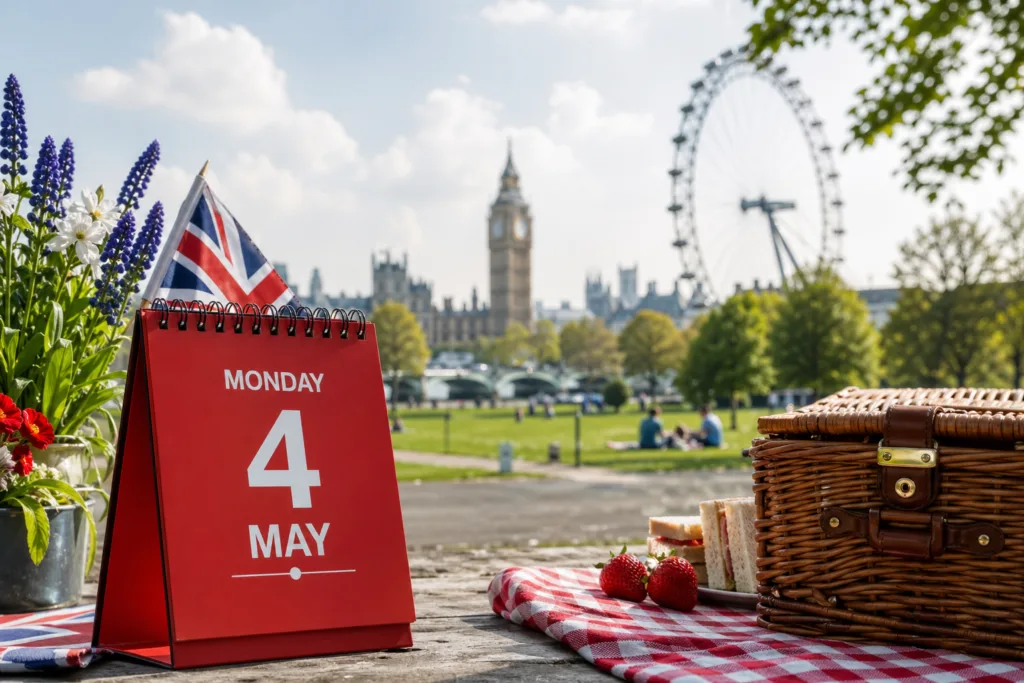
That simple answer, though, hides a more interesting story. The May holiday weekend in Britain is not just a break in the diary. It is a collision of ancient spring rituals, modern labour politics, changing legislation and one very British habit: turning a public holiday into a long-weekend ritual involving garden centres, rail disruption and weather complaints.
When is May Day in 2026, and why do people confuse it with the holiday?
When is May Day? In 2026, it falls on Friday, May 1. But the UK day off linked to it is not on the 1st itself. Instead, the public holiday is observed on the following Monday, which in 2026 lands on May 4.
That distinction matters because many people use “May Day” and “bank holiday” as if they were the same thing. Strictly speaking, they are not. May Day is the traditional spring festival date. The British day off is a scheduled Monday holiday.
What is this holiday, and why is it celebrated?
The answer depends on which layer of history you look at.
At the oldest level, May Day is tied to seasonal celebration. The festival has roots in pre-Christian spring customs associated with renewal, fertility and the return of light. The wider history of May 1 celebrations, including the Beltane tradition and later floral customs, is outlined by History.
At the modern British level, the public holiday is more administrative than mystical. The country uses a Monday-based bank holiday structure, and the early-May break became a formal recurring fixture in the late 1970s. The parliamentary record in Hansard shows that the government announced in 1976 that a May Day bank holiday would be introduced from 1978.
So the short version is this: the symbolism is ancient, but the long weekend is relatively modern.
Why does Britain have two different May holidays?
This is where many readers get tripped up. Britain does not just have one May break. It usually has two.
- The first is the early-May Monday holiday on May 4, 2026.
- The second is the Spring Bank Holiday 2026, which falls on Monday, May 25, 2026.
If you are asking when is the spring bank holiday or what date is spring bank holiday, the answer in 2026 is May 25, as listed on GOV.UK.
Historically, the later holiday replaced Whit Monday in the modern calendar. The legislative shift is reflected in the parliamentary history around the Banking and Financial Dealings Bill, which fixed the spring and summer holidays on the last Mondays of May and August for England and Wales.
So when is May bank holiday 2026?
If someone searches when is May bank holiday 2026, the most useful answer is: there are actually two relevant dates.
- Monday, May 4, 2026 is the early-May holiday.
- Monday, May 25, 2026 is the late-May break.
That is why search interest often spikes around both “May Day” and “spring” at the same time. Many people are not looking for history at all. They are trying to work out which Monday they actually get off.
Why are bank holidays called bank holidays in the first place?
The phrase comes from finance, not folklore. Bank holidays were originally days when banks closed and certain financial obligations shifted to the next working day. The legal roots go back to the Bank Holidays Act 1871, introduced by Sir John Lubbock.
The modern framework is explained by the House of Commons Library, which notes that bank holidays are now created under the Banking and Financial Dealings Act 1971.
In other words, the word “bank” is not decorative. It is the legal clue to how the system began.
Interesting facts that make the May holiday more than just a day off
Some of the most revealing details around this holiday are the ones that rarely make it into search snippets.
- The early-May holiday is younger than many people assume. It only became a regular fixture from 1978, even though May Day traditions are much older.
- The late-May holiday replaced the older Whit Monday structure in the modern bank holiday system.
- In 2020, the early-May break was moved from a Monday to Friday, May 8 to mark the 75th anniversary of VE Day, as shown in the historical dates on GOV.UK.
- A bank holiday does not automatically mean a paid day off. The government’s own guidance says employers do not have to give paid leave on bank or public holidays unless the employment contract provides for it.
- The August holiday is not uniform across the whole UK. In 2026, August bank holiday 2026 falls on Monday, August 31 in England, Wales and Northern Ireland, but on Monday, August 3 in Scotland, according to the official government calendar.
Why the holiday still matters culturally
For many people, this weekend now feels less like a formal civic event and more like a marker of seasonal mood. It is when pub gardens start to matter again, travel prices jump, parks fill up and everyone pretends the weather has permanently improved.
But underneath that lifestyle version, older cultural traces are still easy to spot. Across Britain, May is still associated with maypoles, Morris dancing, village fairs, flower crowns and rituals of spring. The old idea survives even when the modern celebration becomes a retail weekend or a short break by the coast.
That is probably why this holiday keeps generating search demand year after year. It sits at the point where the calendar becomes emotional. People are not only asking for a date. They are asking what part of the year they are entering.
What to remember for 2026
If you want the cleanest practical summary, it is this:
- The first May-related public holiday in 2026 is Monday, May 4.
- The later one falls on Monday, May 25.
- The summer holiday is Monday, August 31 in most of the UK, but Monday, August 3 in Scotland.
That may sound simple, but the reason people keep searching for these dates is that the May calendar is a strange mix of old ritual and modern scheduling. One holiday welcomes spring. The other signals the slide toward summer. Together, they tell you more about Britain than many grand national ceremonies do.
FAQ
When is May bank holiday 2026 in the UK?
The first May-related bank holiday in 2026 is Monday, May 4. There is also another one later in the month on Monday, May 25.
When is May Day?
May Day itself falls on Friday, May 1, 2026, but the linked public holiday is observed on the following Monday.
When is the spring bank holiday?
In 2026, it falls on Monday, May 25.
What date is spring bank holiday?
The 2026 date is May 25.
What is the next bank holiday after April 27, 2026?
For England, Wales, Scotland and Northern Ireland, the next nationwide date is Monday, May 4, 2026.
When is the August bank holiday in 2026?
It is Monday, August 31, 2026 in England, Wales and Northern Ireland, while Scotland observes it on Monday, August 3, 2026.
Do workers automatically get paid leave on a bank holiday?
No. The official government guidance says there is no automatic right to paid leave on these dates; it depends on the employment contract.