A cruise ship is built on a seductive promise: that distance can be made elegant. You unpack once, the world glides past, and the machinery beneath the calm remains tastefully invisible. That is part of the shock of the MV Hondius story. It took one of travel’s most self-contained environments and turned it, briefly, into the setting for a very modern anxiety: a rare virus, patchy social-media certainty, passengers in cabins, repatriation flights and the inevitable whisper that this might be the start of something much larger.
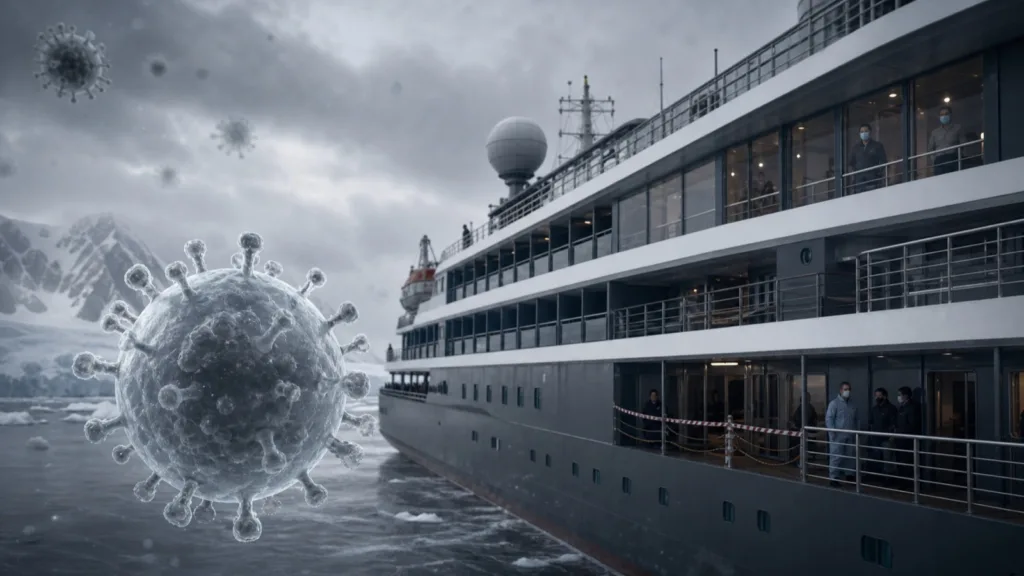
It is not. But it is serious.
As of 15 May 2026, the European Centre for Disease Prevention and Control said 11 cases linked to the Hondius cluster had been reported, including eight confirmed, two probable and one inconclusive case, with three deaths. The virus involved is Andes virus, a type of hantavirus. The World Health Organization has assessed the global risk as low, while the CDC says the overall risk to travellers and the public remains extremely low.
That combination, serious but not apocalyptic, is what makes this story worth understanding properly.
Searches for hantavirus cruise, hantavirus ship, hantavirus cruise ship, cruise ship hantavirus, hantavirus infections cruise ship, hantavirus outbreak cruise ship, cruise ship hantavirus outbreak and even hantavirus lockdown have surged because people are trying to answer the same practical question from different angles: what actually happened on this cruise ship, and does it change the way anyone should think about travel?
What happened on the MV Hondius?
According to the WHO’s 13 May outbreak update, the first working hypothesis is that the initial case acquired infection on land before boarding, likely during travel in South America, where Andes virus is found. Investigators now believe subsequent transmission occurred on board the ship among passengers in a confined setting involving close and prolonged contact.
That detail matters. Most hantaviruses are discussed as rodent-borne infections: something connected to contaminated droppings, urine, saliva or nesting material, often in rural cabins, barns, campsites or poorly ventilated indoor spaces. Andes virus is different in one crucial respect. The CDC’s Andes virus guidance says it is the only hantavirus known to spread from person to person, although it does not spread easily and transmission is usually limited to close contact with someone who is ill.
In other words, the Hondius story is not important because a cruise ship suddenly became a magical incubator for a mysterious pathogen. It is important because a rare virus that usually begins with rodent exposure appears to have found the sort of close-contact setting in which limited onward transmission can happen.
Why this hantavirus outbreak is not “another COVID”
The comparison was inevitable. WHO has been blunt in trying to stop it from hardening into a narrative. On 7 May 2026, WHO said the outbreak was “not the start of another COVID pandemic” and described the public-health risk as low. The agency’s explanation is straightforward: Andes virus does not spread with anything like the efficiency of SARS-CoV-2, influenza or measles.
The CDC’s cruise ship FAQ makes the same point. Andes virus can spread between people, but usually only where there has been prolonged direct physical contact, extended time in close or enclosed spaces, or exposure to saliva, respiratory secretions or other body fluids. That is not the pattern of a fast, freely circulating airborne pandemic virus. It is a narrower, harsher and more intimate mode of transmission.
This matters for travellers because fear tends to flatten risk. Once a story contains the words “outbreak”, “ship” and “quarantine”, many readers stop distinguishing between a severe cluster and a globally disruptive pathogen. The distinction is the whole story.
How hantavirus usually spreads, and why Andes virus is unusual
The broader hantavirus family is still best understood through rodents. The CDC’s prevention guidance says people usually become infected when virus-contaminated dust is stirred up from fresh rodent urine, droppings or nesting material and then inhaled. Infection can also happen if contaminated material gets into the eyes, nose, mouth or broken skin.
For that reason, classic hantavirus advice still begins with rodent control, safe clean-up practices and avoiding contaminated spaces. That remains true. What changed in this case is not the biology of all hantaviruses, but the presence of Andes virus, which is unusually capable of limited human-to-human spread.
That is also why the phrase hantavirus outbreak has suddenly moved from wilderness medicine into mainstream travel headlines. This is not because cruise holidays are now a natural habitat for hantavirus. It is because a specific strain, in a specific set of circumstances, behaved differently enough to trigger an international public-health response.
What symptoms should travellers actually watch for?
The early symptoms of Andes-virus-related hantavirus pulmonary syndrome can look deceptively ordinary. According to the CDC FAQ and the CDC clinical overview, early symptoms can include:
- fatigue
- fever
- muscle aches, especially in the thighs, hips, back and shoulders
- headache
- dizziness
- chills
- nausea, vomiting, diarrhoea or abdominal pain
The incubation period is broad: symptoms can appear roughly 4 to 42 days after exposure. That long window is one reason the public-health response has involved international tracing, monitoring and quarantine rather than a quick announcement and a shrug.
The crucial red-flag phase comes when breathing becomes difficult. Andes virus can cause hantavirus pulmonary syndrome, a severe lung disease. CDC says 38% of people who develop respiratory symptoms may die from the disease. There is no specific antiviral treatment or vaccine currently available; care is supportive, and early medical attention matters enormously.
So the practical rule is simple. If you have a credible exposure history and then develop fever, muscle aches or especially shortness of breath, do not “wait and see” in the casual way people often do with routine viral illness. Seek medical advice urgently.
Was there really a “hantavirus lockdown” on the ship?
This is one of those search phrases that says more about public mood than official terminology.
Hantavirus lockdown is understandable, but it is not the cleanest description of what happened. According to UN Geneva’s summary of the WHO briefing, passengers still on board were asked to remain in their cabins while disinfection procedures were carried out, and anyone developing symptoms was to be isolated immediately. WHO has also described a response involving case isolation, clinical management, quarantining, monitoring, medical evacuation and contact tracing.
That is closer to targeted outbreak control than to the sweeping, society-wide meaning many readers now attach to the word “lockdown”. It still feels dramatic, of course. Cabin confinement on a ship is dramatic. But precision matters, especially in health reporting. A controlled containment response is not the same thing as evidence of runaway spread.
What should ordinary cruise passengers take from this?
Probably less than the internet suggests, but more than “nothing to see here”.
If you were not on the Hondius or directly linked to the cluster
The current risk to the general travelling public is low. WHO says the global risk is low. ECDC says the risk to the EU/EEA general population is very low. CDC says the overall risk to travellers remains extremely low. For most people reading about this from afar, the story is not a reason to cancel a cruise.
If you were on the ship, on a linked flight, or in close contact with a case
Follow official monitoring guidance from local health authorities. Andes virus is not something to self-diagnose from TikTok and vibes. Because the exposure window can stretch across weeks, monitoring is more useful than panic and more responsible than denial.
If you are travelling in parts of South America where Andes virus circulates
The core prevention advice remains distinctly unglamorous: avoid rodent-infested places, do not disturb rodent droppings or nesting material, ventilate enclosed spaces before cleaning them, and follow safe clean-up guidance. In most cases, the best hantavirus prevention is less about cruise etiquette than about not inhaling contaminated dust in the first place.
Why the cruise ship setting matters anyway
The phrase cruise ship now carries a post-2020 charge all its own. It suggests self-containment, vulnerability, surveillance, a floating ecosystem in which private holiday and public health can suddenly collide. That is part of why this event has travelled so quickly through headlines.
But the setting matters medically too. WHO’s current assessment says the cluster occurred in a confined environment involving prolonged close contact among passengers. That does not mean every ship is a viral trap. It means ships can turn rare transmission opportunities into epidemiological events that are easier to detect, harder to ignore and far more symbolically potent than a similar cluster dispersed across ordinary life.
That symbolic charge explains why the search term cruise ship hantavirus outbreak feels larger than the case numbers themselves.
The useful bottom line
The Hondius case deserves attention for three reasons.
First, it is a real and deadly event, not a social-media mirage. Second, it involves Andes virus, the one hantavirus known to allow limited person-to-person spread. Third, it is still not evidence that the average traveller faces a high risk of catching hantavirus on holiday.
The most useful response is neither panic nor smug dismissal. It is proportion. Know what happened. Know the symptoms. Know that rodent exposure is still the main story in hantavirus epidemiology. Know that this shipboard cluster appears unusual precisely because it is unusual. And know, above all, that serious outbreaks are best understood by narrowing the facts, not widening the fear.
FAQ
What is the hantavirus cruise ship story actually about?
It refers to the Andes-virus cluster linked to the Dutch-flagged expedition vessel MV Hondius. As of 15 May 2026, ECDC reported 11 linked cases and three deaths.
Is cruise ship hantavirus a sign that hantavirus now spreads easily on ships?
No. Current evidence points to a rare outbreak involving Andes virus, which is the only hantavirus known to allow limited person-to-person transmission. Health agencies still describe the wider public risk as low or very low.
Are hantavirus infections cruise ship cases common?
No. What makes this event newsworthy is precisely that it appears unusual. Hantavirus is generally associated with rodent exposure, not mainstream cruise travel.
Did the hantavirus outbreak cruise ship response amount to a real lockdown?
Not in the broad political sense most people now hear in that word. Passengers were confined to cabins during parts of the response, symptomatic people were isolated, and contacts were monitored and in some cases quarantined.
What should I do if I develop symptoms after possible exposure?
Seek medical advice urgently, especially if you develop fever, muscle aches and then breathing problems after close contact with a case or travel linked to the outbreak.