By the time Grand National 2026 was over, it was clear this had not been just another major day in British racing.
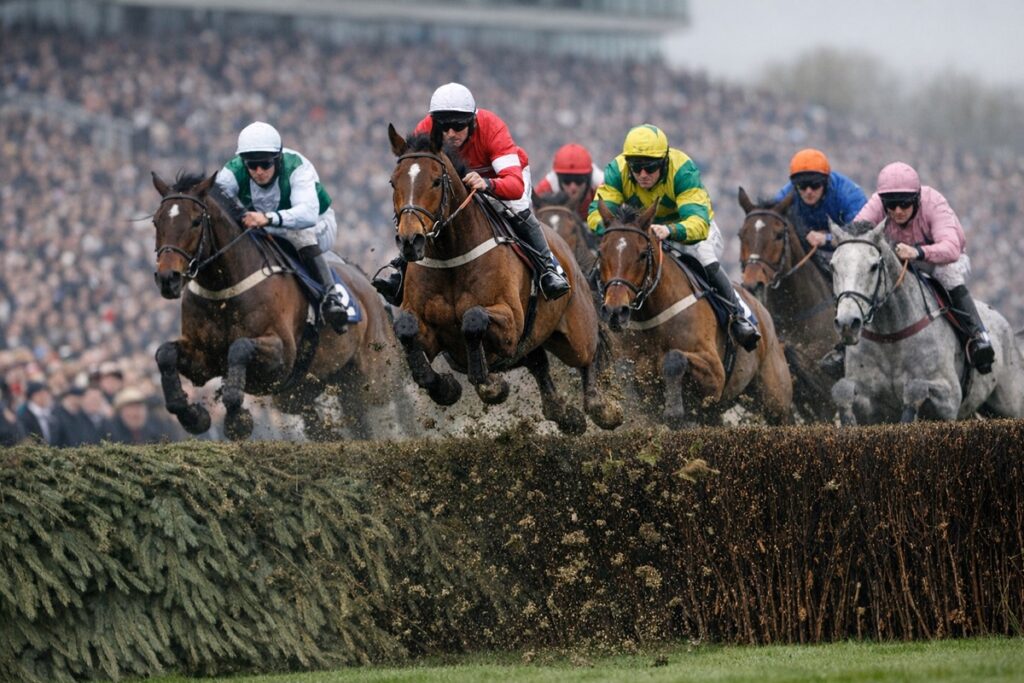
Yes, the race delivered the scale, tension and familiarity that people expect from The Grand National. There was a packed Aintree, a field full of intrigue and, at the centre of it all, a winner with genuine history behind him. But what made the 2026 running linger was not only the race itself. It was the uncomfortable contrast between celebration and fallout — between the grandeur of the sport and the questions that resurfaced almost immediately after the festival ended.
For anyone searching grand national runners, grand national runners 2026 or grand national 2026 runners, the story of this year’s race is no longer about anticipation. It is about memory. It is about which horses shaped the conversation, which moments carried real weight and why the aftermath became almost as widely discussed as the action on the track.
The Grand National still knows how to create a spectacle
That has always been part of its power.
The Grand National is one of the few sporting events that can pull in people from completely different worlds at once: racing enthusiasts, once-a-year viewers, casual punters and readers who would not normally open a racing page at all. Aintree still presents it as the centrepiece of the spring calendar, and the 2026 running arrived with all the familiar ingredients — prestige, noise, risk, expectation and the sense that the race could produce something unforgettable.
It did.
But not in a tidy way.
Grand National runners 2026: a field that gave the race real depth
One reason grand national runners 2026 attracted so much attention is that this was not a thin or forgettable field. Racing Post’s final runners-and-riders coverage included names such as I Am Maximus, Banbridge, Grangeclare West, Gerri Colombe, Haiti Couleurs, Firefox, Iroko, Favori De Champdou and Three Card Brag, while official Aintree material had already signalled the quality of the likely line-up through the weights publication earlier in the build-up.
That matters because the best Grand Nationals are not remembered simply because of the winner. They are remembered because the field gives the race texture. Some horses bring class. Some bring momentum. Some arrive with expectation. Some carry the quiet feeling that, if everything falls right, they could change the shape of the day.
That is exactly what gives phrases like 2026 grand national runners, runners grand national 2026 and runners in grand national lasting search value even after the race has been run. People come back to the field to understand what they missed the first time.
I Am Maximus gave Grand National 2026 its defining image
Every Grand National needs a centre of gravity, and in 2026 that was I Am Maximus.
According to Aintree’s official post-race release, I Am Maximus won the 2026 Grand National under Paul Townend for trainer Willie Mullins, becoming the first horse since Tiger Roll to win the race twice. The win also marked a fourth Grand National success for Mullins as a trainer and a fourth in the race for owner J. P. McManus.
That is the kind of result that changes the emotional tone of a race. Before the off, the Grand National always feels open, crowded with possibility and vulnerable to chaos. After a result like this, the picture sharpens. A race that looked wide open starts to feel slightly more legible. The noise settles, and what remains is the impression of a horse who understood the demands of the occasion in a way very few ever do.
It also gave Grand National 2026 something every huge sporting event wants: a winner who made the story bigger, not smaller.
The Grand National runners were only part of the story
If this had been just a race recap, that would have been enough.
But the reason the festival stayed in the headlines is that the most memorable moments at Aintree were not limited to the National itself. In the aftermath of the meeting, attention shifted toward two issues that made the wider Grand National Festival feel far more complicated than a straightforward sporting celebration.
The first was a disqualification that quickly became one of the most talked-about incidents of the week. The second was the renewed debate over equine welfare after two horse deaths at the festival.
Together, they changed the tone of the conversation.
A festival winner disqualified: the incident that cut through the noise
One of the sharpest post-event storylines came not from the Grand National itself, but from Friday’s Debenhams Handicap Hurdle at Aintree.
According to the linked report, Laafi crossed the line first in the race but was later disqualified after jockey Patrick M O’Brien was found to have used his whip 11 times from the second-last hurdle, exceeding the permitted limit of seven by four strikes. The British Horseracing Authority’s Whip Review Committee disqualified the horse under the relevant rule, and O’Brien received a 28-day suspension running from 2 May to 4 June 2026.
That kind of decision changes how a festival is remembered. It interrupts the rhythm of celebration and forces the audience to look at the sport through a different lens. What had initially looked like an emotional success story — an 88-year-old trainer, an outsider winning at Aintree, a jockey enjoying a breakthrough moment — turned almost instantly into a debate about rules, enforcement and where racing draws its ethical lines.
For content, that matters. It means Grand National 2026 was not just memorable because it was dramatic. It was memorable because its drama turned into scrutiny.
Tragedy at Aintree deepened the conversation around the sport
The more serious and lasting shadow over the festival came from the deaths of Gold Dancer and Get On George, both of whom died after racing at Aintree during the 2026 Grand National Festival, according to the report and the RSPCA statement cited in it. The same report said those deaths brought the number of competitive horse-racing fatalities in the UK in 2026 to 44 at that point, and the RSPCA noted that the total number of horse deaths at the festival since 2016 had reached 26.
That is the kind of context that changes the register of an article completely. You are no longer writing only about spectacle, tactics, runners or legacy. You are writing about the uncomfortable fact that racing’s biggest stages also intensify scrutiny of the risks the sport carries.
The RSPCA, as quoted in the report, acknowledged that improvements had been made to Grand National safety in recent years but argued that more still needed to be done, including stronger protection from serious risk and a ban on the whip for encouragement. The BHA, meanwhile, said every fatal injury in British racing is reviewed in detail and pointed to long-term investment in equine science, research and welfare, including £63 million invested since 2000 and a fatal injury rate reduced to just over two in every 1,000 runners.
This is exactly where a stronger editorial voice matters. A weaker article either becomes sensational or evasive. A better article does neither. It recognises that the Grand National can still be culturally powerful and emotionally complicated at the same time.
Why Grand National 2026 stayed in people’s minds
Many major sporting events are loud for a day and then disappear into the next news cycle.
This one did not.
Grand National 2026 stayed with people because it delivered several stories at once. It had a historically significant winner in I Am Maximus. It had a field that gave real depth to searches around the grand national runners and runners in grand national. It had a disqualification that felt jarring enough to cut through ordinary festival coverage. And it had the kind of welfare debate that keeps returning to racing’s biggest meetings, whether the industry likes it or not.
That combination is what makes the article stronger if you write it from a post-event perspective. You are not trying to create hype. The event already happened. Your job now is to interpret it clearly and memorably.
The difference between a standard recap and a memorable one
Most recap articles fail because they confuse information with insight.
They list the runners.
They mention the winner.
They note the controversy.
Then they stop.
But readers do not remember articles that simply stack facts in the correct order. They remember pieces that help them feel the shape of what happened.
In the case of The Grand National, that means understanding the event as more than a racecard and more than a result sheet. It means seeing why the field mattered, why the winner mattered, why the disqualification mattered and why the wider festival raised questions that do not disappear when the grandstand empties.
That is the level your style should aim for on insidescandale.com: not louder than everyone else, but sharper; not colder than everyone else, but clearer; not generic SEO dressed up as commentary, but real editorial voice with search intelligence underneath it.
Final thoughts on Grand National 2026
If people land on this article through searches like grand national 2026, grand national runners 2026, grand national 2026 runners, 2026 grand national runners, runners grand national 2026, the grand national, the grand national runners, runners in grand national or grand national runners, they should leave with more than a list of names.
They should leave with a story that feels complete.
And the full story of Grand National 2026 is that it was both spectacular and unsettled. It gave Aintree a winner with real historical weight in I Am Maximus. It gave readers a field worth revisiting. And it gave the sport another reminder that its biggest stages do not only produce glory — they also intensify every unresolved question around rules, pressure and welfare.
That is why people kept talking about it.
Not because it was merely big.
Because it was difficult to forget.
FAQ
Who won Grand National 2026?
I Am Maximus won Grand National 2026 under Paul Townend for trainer Willie Mullins.
Why were people still searching for grand national runners 2026 after the race?
Because once the race is over, the field becomes a way of re-reading the event. People revisit the Grand National runners 2026 to understand which horses shaped the story and what the result looked like in hindsight.
What controversy surrounded the 2026 Grand National Festival?
A major talking point was the disqualification of Laafi in Friday’s Debenhams Handicap Hurdle after jockey Patrick M O’Brien exceeded the whip-use limit by four strikes, leading to a 28-day suspension.
What made the festival especially difficult for racing’s image?
The deaths of Gold Dancer and Get On George at the festival reignited debate about equine safety and welfare, prompting strong reactions from the RSPCA and a defence of current safety measures by the BHA.