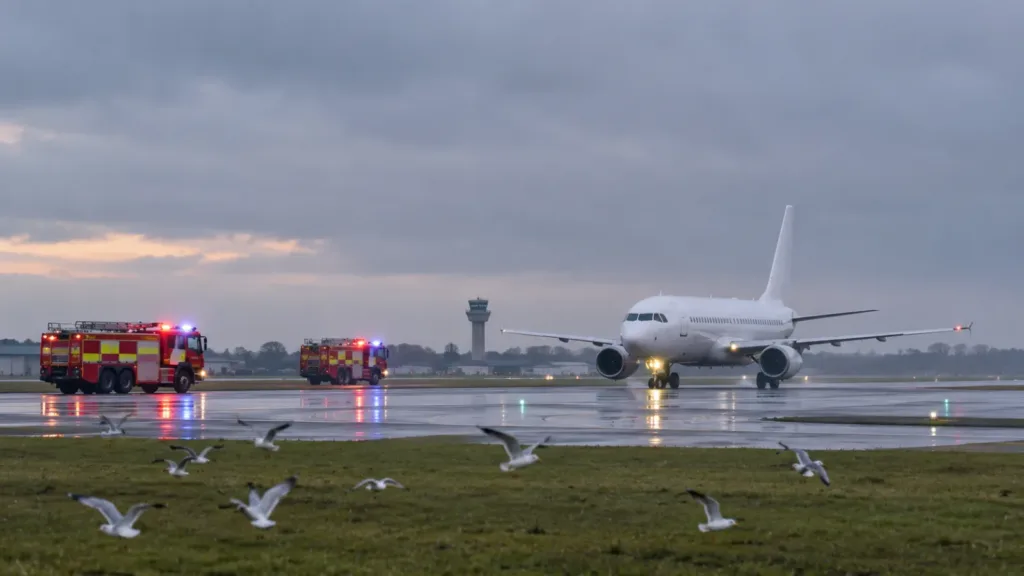
An easyJet flight from Bristol Airport to Edinburgh declared an emergency and turned back on the morning of Wednesday 18 November after hitting a bird shortly after take-off. Flight EZY213, an Airbus A320, circled over the Bristol Channel before landing safely back at Bristol around 40 minutes after it left. No one was hurt, and passengers were flown to Edinburgh on a replacement aircraft later that day.
The incident was quickly picked up by flight-tracking enthusiasts and regional media, which explains the spike in searches. For the passengers on board, and anyone wondering what they would be owed in the same situation, the more useful question is what the rules say about compensation when a bird is to blame.
What happened on easyJet flight EZY213?
The flight left Bristol shortly after 9am. According to the aviation site Airlive, the aircraft struck a bird during or just after its take-off roll, damaging one engine and causing high vibration. The crew levelled off at around 15,000 feet, set the 7700 emergency transponder code and asked to return. Air traffic control gave the aircraft priority, and it landed back on Bristol’s runway 27 with emergency services standing by as a precaution.
easyJet confirmed the basic facts. “Flight EZY213 from Bristol to Edinburgh this morning returned to Bristol due to a bird strike after take-off,” a spokesperson said, as reported by the Edinburgh Evening News, adding that the aircraft landed normally. The airline said the captain had returned as a precaution and that safety was its highest priority. The damaged aircraft was taken out of service for engineering inspection, and passengers continued to Edinburgh on another A320, arriving at around 1pm.
How common are bird strikes?
Far more common than most passengers realise. The UK Civil Aviation Authority recorded 1,702 reported bird strikes across UK operations in 2025, according to figures cited by The Traveler. The overwhelming majority cause no harm at all; a minority damage an engine or windscreen, and only a handful lead to emergencies like Wednesday’s. Airports run wildlife-control programmes, from habitat management to bird-scaring, precisely because take-off and landing, when aircraft are low and engines at high power, are the moments of greatest exposure.
Declaring an emergency in these circumstances is routine caution rather than a sign of imminent danger. It gives the crew priority and ensures fire and rescue teams are in position, which is exactly what happened at Bristol.
Can you claim compensation for a bird strike delay?
Usually not, but you are still owed care and a way to get where you were going. Under UK261, the retained version of the EU’s air passenger rules, passengers on a short flight such as Bristol to Edinburgh (under 1,500km) can claim £220 compensation if they reach their destination more than three hours late, according to the Civil Aviation Authority. The airline does not have to pay, however, if the delay was caused by “extraordinary circumstances” that could not have been avoided even if all reasonable measures had been taken.
Bird strikes have been treated as extraordinary since the Court of Justice of the European Union’s ruling in Pešková and Peška v Travel Service (C-315/15) on 4 May 2017. The court held that a collision between an aircraft and a bird is not inherent in the normal running of an airline, so it can exempt the carrier from paying compensation. That judgment pre-dates Brexit and continues to inform how UK261 is applied.
There is an important nuance. In the same case the court said the airline must show it took reasonable measures to prevent the strike and to limit the knock-on delay. If part of the delay was caused by something within the airline’s control, such as an unnecessary additional check after a qualified engineer had already cleared the aircraft, that portion may not be covered by the exemption. In practice, claims of this kind are rarely straightforward.
What are passengers entitled to regardless?
The extraordinary-circumstances defence removes the cash payment; it does not remove the airline’s other duties. On a short-haul flight delayed by two hours or more, the CAA says passengers are entitled to:
- Food and drink appropriate to the length of the wait, often provided as vouchers.
- A means of communication, such as reimbursement of calls.
- Hotel accommodation and transfers if the delay runs overnight.
- Rerouting or a refund: if a delay reaches five hours you can choose not to travel and get your money back for the unused flights.
easyJet’s decision to put passengers on a replacement aircraft the same day is the rerouting obligation in action. Anyone who paid out of pocket for food or onward travel because assistance was not provided can claim reasonable costs back, so keep receipts, boarding passes and any messages from the airline.
What happens next?
The aircraft will remain out of service until engineers have inspected and, if necessary, repaired or replaced the affected engine. Incidents of this kind are reported to the CAA under mandatory occurrence reporting; there has been no public sign that the Air Accidents Investigation Branch has opened a separate investigation. For passengers the advice is simple: if you are caught up in a bird strike, expect safety and care rather than a cheque, and be wary of claims firms promising otherwise.