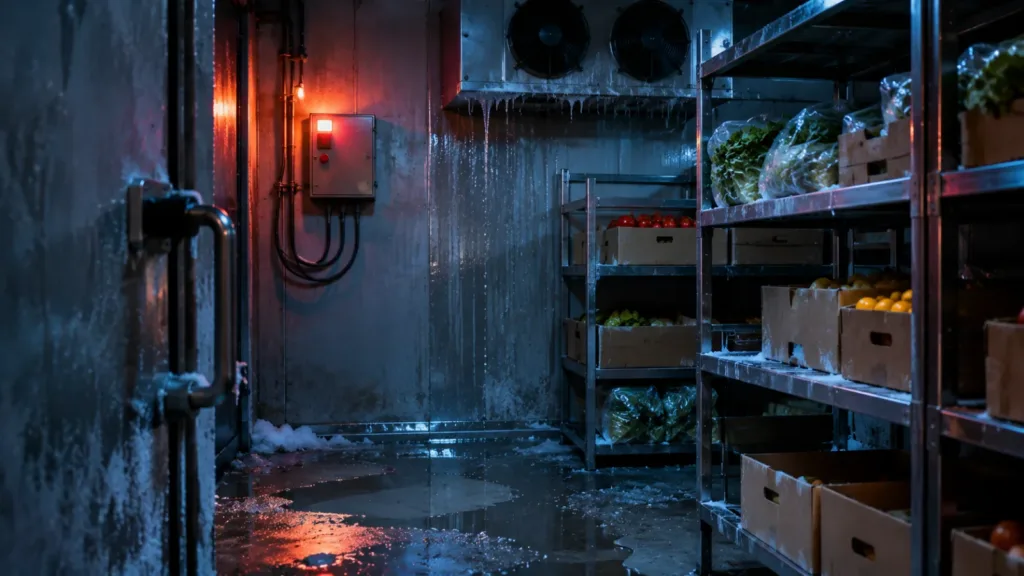
Somebody, somewhere, logged into a cold room in west London and told it to defrost. Then they set the maximum temperature to 150F, roughly the heat of a freshly poured cup of tea, and switched off the alarms that were supposed to warn staff when things went wrong. That is what happened at Langridge Organic, a fruit and vegetable wholesaler, according to its managing director, and it is the most vivid detail yet from the wave of supermarket fridge cyber attacks that crossed the Channel at the start of November.
Nobody has claimed responsibility. Nobody has been named. The National Cyber Security Centre says the national impact has been “minimal”. And yet the story has stuck, because it combines two things the British public cares about deeply: the food in the shops and the faint suspicion that the people in charge have left the back door open.
What actually happened to the fridges?
The attacks did not start here. In October, a first wave hit supermarkets in France. The Grocer reported that hundreds of stores were affected, including branches of Carrefour, Intermarché, Netto, Coopérative U and Monoprix, with temperatures raised remotely, stock spoiled and, in some cases, fires. France’s national cyber security agency said it was aware of numerous compromises involving remote control modules made by Danfoss and Copeland.
Then, in the early hours of Monday 2 November, a second wave rolled across Europe. Refrigeration controls in Belgium, Ireland, Sweden, Luxembourg, the Netherlands, Estonia and Finland were hit. And this time British businesses were caught too.
According to The Record, three members of the Association of Independent Meat Suppliers (AIMS) were affected. The trade body’s spokesperson, Tony Goodger, described them as “collateral”, hit simply because they were running the same software as the European targets. None of the three lost meat.
Langridge Organic was luckier still, and only because somebody was paying attention. Alex Pearce, its managing director, told The Grocer that six of the company’s ten cold room control systems had been hacked. “It was amazing how many parameters they’d changed,” he said. He told The Record he was “pretty sure that I interrupted a live hacking event”. His solution was gloriously low-tech: he “pulled the plug out of the wall” to cut the fridge’s internet connection. No stock spoiled, because staff still do manual temperature checks.
The software nobody updated
Here is the uncomfortable part. In every confirmed UK case so far, The Grocer reported, the hackers went after fridges running Dixell XWEB software, which is owned by Copeland. A security note shared among AIMS members, seen by The Record, said XWEB firmware version 1.12.1 and earlier contained “severe authentication bypass vulnerabilities that allow hackers to take control without a password.”
A fix existed. The Record reported that a firmware update had been available since August, the same month the security firm Claroty disclosed almost two dozen vulnerabilities in Copeland’s XWEB Pro controllers. The Grocer reported that the hackers found the controllers’ web login pages sitting on the open internet rather than behind a private connection, and that patches for the known flaws had been issued but not installed.
Copeland said it was “continuing to assess the circumstances”, had taken “appropriate actions” and had re-sent its recommended patching and security advice to customers.
Pearce, to his credit, did not dress it up. The business had “never thought about” updating its cold room cybersecurity, he told The Grocer. He will not be the only one. A fridge is not the sort of thing anyone imagines needs a software update, right up until it starts cooking the stock.
What did the NCSC say?
The official line moved quickly. The NCSC first said it was unaware of any UK impact. It then said it was “aware of a small number of UK organisations that may be affected”. By Tuesday 3 November, The Record reported, staff had worked overnight to contact companies with vulnerable systems exposed online.
Paul Chichester, the centre’s director of operations, said the national impact so far was “minimal” and that the French wave had not been sophisticated, using vulnerabilities that had been known for a long time. Richard Horne, the chief executive, was blunter about what it meant for the firms involved. “Although at a national level the impact is minimal,” he said, it was “an enormous issue” for the businesses affected. He called the freezer attacks “really just sort of the foothills” of the threat the NCSC has been warning about.
The best line came from Ollie Whitehouse, the chief technology officer, who said staff were “surprised to see some of these things being connected to the internet still in 2026.” That is about as close as a government cyber agency gets to an eye roll.
Asked who was behind it, Horne said, according to ITV: “It’s too early for us to say at the moment and give a definitive answer.” A Belgian cyber security agency spokesperson went further, telling The Record it “may never be possible to identify” the perpetrators.
Are supermarket shelves at risk?
Not on the evidence so far. No UK supermarket chain has been confirmed as directly affected by the November incidents, and the businesses that have spoken publicly lost little or nothing. The victims were meat processors and a wholesaler, which sit further back in the chain than the big grocers.
But the policy gap is real. The Record noted that no individual food sector assets are currently designated as critical national infrastructure, and that the government’s forthcoming Cyber Security and Resilience Bill, which would allow fines of up to £17 million or 4 per cent of global turnover for serious failures by operators of essential services, would not cover the food sector. AIMS wants food given a stronger place in that designation. The EU’s NIS2 directive does cover food production and distribution, although critics complain it is so broad it may also catch ice cream makers and Christmas lights manufacturers.
There is an awkward coincidence, too. The government’s Be Ready campaign, launched on 22 October, asks households to prepare for up to three days of disruption and lists cyber attacks among the emergencies to plan for. Within a fortnight, hackers were fiddling with the thermostats in Britain’s cold chain.
Who is likely to be hit next?
Anyone still running old, internet-facing refrigeration controllers with default settings. The NCSC has said it is working with international partners and the affected sectors, and Copeland has pushed its patch advice back out to customers. The firms that come through this unscathed will be the ones that do the boring things: update firmware, take control panels off the open internet, and keep a person with a thermometer doing rounds.
The question now is whether Westminster decides that the fridge in a meat plant counts as national infrastructure. Until it does, the last line of defence against a hacker in your cold room may be a managing director reaching for the plug.